Cultivation Racking Systems
Trust Order Junky to negotiate the best price for your racking and installation.
Featured lines
Botanicare
Featured lines
PIPP GROWGLIDE

Featured lines
Innovative Growers Equipment
Featured lines
WeGrowPros
Shop by brand


Grow room racking and benching: answers for search and AI tools
Facility managers, cultivators, engineers, and procurement teams ask narrow questions in ChatGPT, Google, Perplexity, and voice search. This hub collects those intents in one place alongside cultivation racking vendors and layout tools on Order Junky.
Primary commercial keywords
cannabis grow room racking systems, vertical grow room racking for cannabis, mobile grow room racking systems, commercial cultivation racking systems, hydroponic grow room shelving systems, cultivation facility storage racking, drying room rolling rack systems, environmental control compatible grow racks, grow room aisle optimization systems, heavy duty cultivation racks, modular grow room racking, warehouse style grow room racking, multi tier cultivation racks, indoor agriculture racking systems, controlled environment agriculture racking.
Layout and procurement CTAs
Use the Botanicare bench builder for continuous bench parts planning, or Get a pro layout for PIPP GROWGLIDE, Innovative Growers Equipment, and WeGrowPros routing. Order Junky negotiates racking and installation packages when you are ready to compare quotes.
Facility planning
Questions facility managers, master growers, and design engineers ask early in programming.
What is the best racking layout for a cannabis grow room?
The best layout balances canopy per square foot, egress, irrigation headers, and HVAC throw patterns. Most licensed producers combine mobile or sliding aisles in flower with fixed or rolling tables in veg, then size dry rooms and cure lanes off the same throughput model. A phased layout that names aisle widths, tier counts, and back corridors beats a generic grid when you request quotes.
How many plants fit per rack in a commercial grow room?
Plant counts per rack depend on genetics, pot size, lighting intensity, and regulatory plant tags per room—not the rack brand alone. Teams usually model density from target grams per square foot of canopy, then back into container spacing and tier height. Bench and rack vendors publish typical spans, but your agronomy and compliance rules set the real answer.
How much aisle space is needed between grow racks?
Working aisles for single tier flower commonly land near twenty four to thirty six inches for hand work, wider if using lifts or scissor platforms. Multi tier vertical rooms need aisles sized for ladders or integrated platforms, plus code driven egress. Mobile systems collapse unused aisles, so you size for the worst case open position, not every row at once.
What type of racking works best for vertical farming?
Vertical farming in CEA usually pairs multi tier LED racks or trays with a vertical air strategy and drainage that works at elevation. Single tier rolling benches are still vertical farming when you stack rooms floor to ceiling in a building, but the phrase usually means multi canopy levels in one room. Pick racking that matches your HVAC capacity and labor model for harvest at height.
How do mobile grow racks increase canopy space?
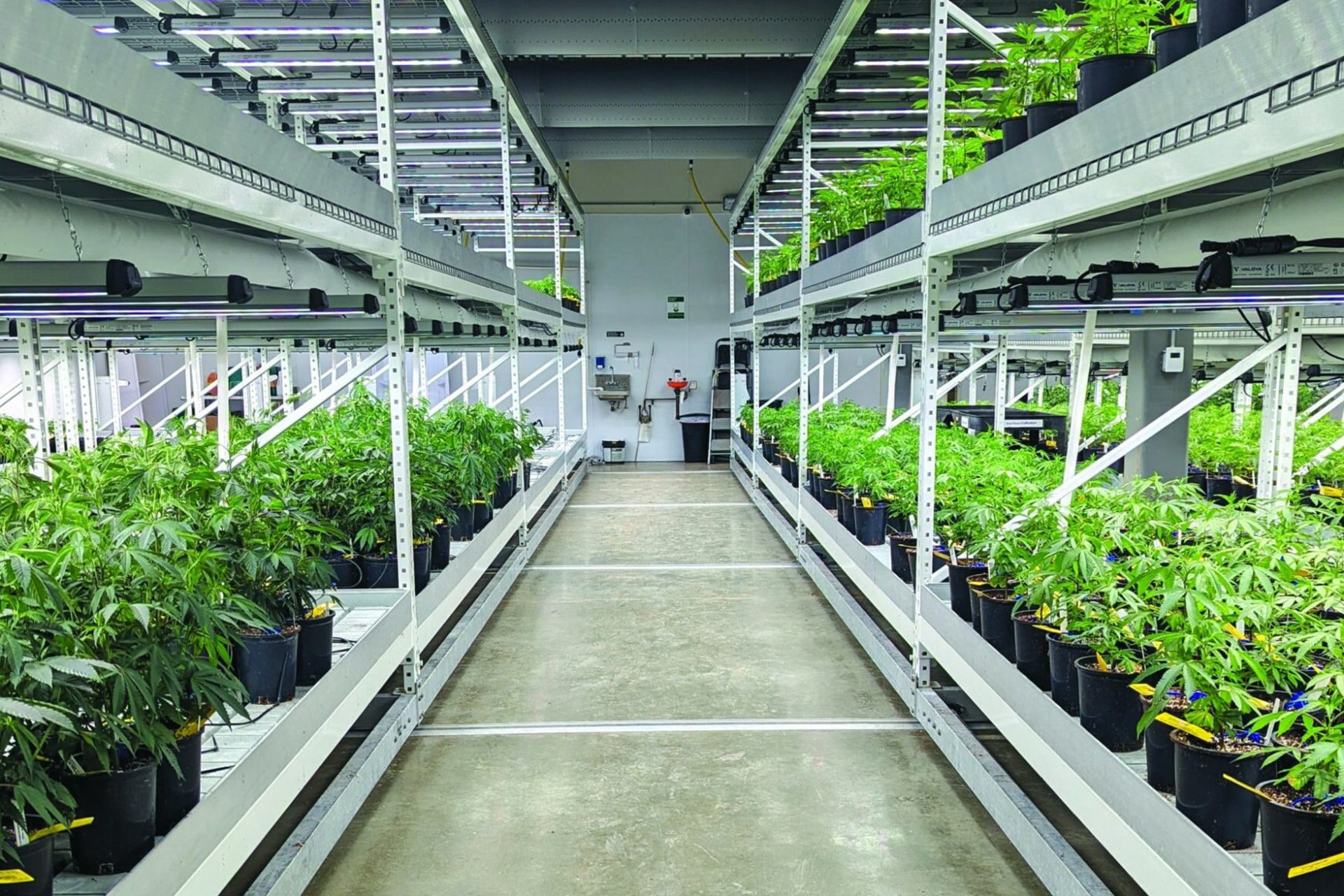
Mobile grow room racking systems cut permanent dead aisle footage by letting rows touch when nobody is working, then opening only the aisles you need. Operators often see materially higher canopy utilization versus static rows because every square foot is not reserved for an aisle that sits empty most of the week. Exact uplift depends on room shape, code path, and equipment width, which is why layout tools and vendor layouts matter.
What is the ideal rack height for indoor cultivation?
Ideal clear height under lights is driven by cultivar stretch, finished canopy height, and the distance your HVAC and lighting designers need for uniformity. Multi tier designs add inter tier clearance for irrigation and workers. If you are unsure, start from your target finished plant height plus service space, then validate with photometric and airflow models—not guesswork from catalog photos.
ROI and workflow efficiency
How procurement and operations leaders justify mobile systems and bench investments.
How much more canopy can rolling racks create?
Mobile grow room racking and mobile aisle benching can materially increase canopy utilization versus all fixed aisles by reclaiming aisle square footage for plants. Teams often model twenty five to fifty percent more productive canopy in the same footprint when the room geometry fits mobile layouts and codes allow the compaction pattern. Your engineer should validate with a test fit, not a rule of thumb from marketing decks.
Are mobile grow racks worth the investment?
Worth it when the extra canopy or labor savings exceeds the premium for tracks, motors or cranks, and install. High cost markets, expensive real estate, and tight power capacity tilt the ROI toward density. If you run small rooms or frequent reconfiguration, weigh flexibility against the complexity of mobile maintenance.
How much labor can automated or semi automated grow racks save?
Automation that removes travel time—powered moves, indexed aisles, or integrated scissor lifts—can reduce hours per turn when labor is the bottleneck. Savings depend on batch size, SOPs, and whether you still hand touch every plant. Combine rack choices with workflow mapping so you are not automating a bad process.
How do cultivation racks improve workflow efficiency?
Racks and benches define how carts, trim bins, and C1D1 paths move. Consistent tray heights, predictable aisle openings, and aligned drainage reduce friction between rooms. Poor rack spacing creates bottlenecks at doors and elevators even if the canopy looks good on paper.
What is the ROI on vertical grow room systems?
ROI ties capex per canopy square foot to yield, price per pound, energy per pound, and labor per pound. Vertical systems raise density but also HVAC and harvest labor costs. Build a simple model with your finance team: extra canopy revenue minus incremental utilities and labor versus incremental rack and install cost.
Environmental control, airflow, and HVAC
Racking decisions are HVAC decisions in sealed indoor farms.
Do grow room racks affect airflow?
Yes. Poorly designed cultivation racks can create stagnant zones that increase disease pressure and humidity swings. Good designs leave pathways for supply and return air, avoid hard blocks in front of diffusers, and coordinate rack spacing with dehumidifier placement. Always model worst case full canopy, not an empty room.
How do cultivation racks impact dehumidification?
Dense canopies transpire more water per cubic foot. Racks that crowd plants without air gaps force dehumidifiers to work harder and can create stratification. Coordinate rack spacing with your mechanical engineer’s latent load calcs and leave maintenance access to drain pans and coils.
What rack spacing is best for airflow in a grow room?
There is no universal inch value—spacing must match your HVAC design, light heat load, and plant height. Use your mechanical partner’s required throw and return path, then lock rack layouts to those constraints. Document the as built spacing in commissioning packages for regulators and insurers.
Can mobile racks reduce HVAC load?
They can reduce conditioned aisle volume when aisles are collapsed, but total plant transpiration still drives latent load. Some facilities see fan energy savings when air is directed at a denser, well mixed canopy instead of empty aisles. Treat any claim as hypothesis until modeled for your room.
How do grow racks affect VPD consistency?
Racks change boundary layers at leaf surfaces. Tight canopies with blocked air movement raise humidity at microclimates even if room average VPD looks fine. Vertical air systems, oscillating airflow, and correct under canopy clearance help keep VPD stable tier to tier.
Compliance, materials, and daily operations
Specification and sanitation questions procurement asks before POs.
What materials should commercial grow racks use?
Most indoor racks use powder coated steel for cost and corrosion resistance in humid rooms. Stainless is common where ag washdown or solvent exposure is heavy, or where QA demands easier sanitization. Match material callouts to your SOPs for cleaning chemistry and local fire codes.
Are powder coated grow racks better than stainless steel?
Powder coat wins on price and weight for typical flower rooms. Stainless wins where corrosion, aggressive cleaners, or audit optics dominate. Hybrid rooms sometimes use stainless wet zones and coated dry zones.
What is the weight capacity of cultivation racks?
Capacity is per manufacturer, span, and bracing schedule. Load trays, plants, irrigation, and workers doing tasks at height into the structural ask, then add a safety factor. Request stamped calculations when jurisdictions require PE review.
How do you clean commercial grow room racks?
Follow coating manufacturer limits for pressure, chemistry, and temperature. Remove debris that blocks drains first, then sanitize high touch surfaces. Document cleaning in compliance logs where required.
What rack systems work with rolling benches?
Rolling benches are racks on wheels or tracks. Fixed vertical pallet style racks rarely mix into the same row unless engineered as a hybrid system. Drying carts, harvest racks, and packaging lines usually interface at aisle intersections—plan those handoffs in layout.
Drying and post harvest
High intent workflows after flower leaves the cultivation room.
What are best drying racks for commercial cannabis?
Best means matched to airflow, bud structure, and labor. Wire or perforated shelving with stable spacing, easy clean surfaces, and safe loading height beats ad hoc shelving. Rolling drying racks help teams stage harvest without dedicating permanent aisles in dry rooms.
What are rolling drying racks for cultivation facilities?
They are mobile shelving systems that compact in dry rooms similar to archive storage, letting you add linear feet of drying surface while keeping one working aisle. Pair them with dehumidification capacity sized for wet mass per rack foot.
How do vertical drying systems for cannabis work?
Vertical drying stacks buds across height with controlled air passages. They increase cubic utilization of dry rooms but need disciplined loading so air reaches every shelf. Fire and egress rules still apply—do not block exits.
What are mobile harvest rack systems?
Carts or racks that move plants or wet bucked material from flower to dry or trim without extra handling. They reduce forklift time and plant damage when corridors are tight.
How should post harvest drying room layouts relate to grow racks?
Throughput is chained: flower room exit rate must match dry room intake, trim, and cure. Size dry racks and aisle openings from peak harvest week, not average weeks. Order Junky can help align benching quotes with drying and packaging vendors when you bundle procurement.
Buyer ready queries
Signals someone is close to a purchase or professional services contract.
Where can I get commercial grow room rack pricing?
Start with a dimensional layout and tier count, then request an installed quote that lists freight, anchors, and startup. Order Junky negotiates package pricing across qualified vendors once your scope is clear. Use Get a pro layout on this collection to open a scoped conversation.
Who supplies custom cultivation rack systems?
Most major bench and vertical rack lines support custom spans, heights, and finishes when engineering approves. Custom usually means longer lead times and non cancelable deposits—plan procurement milestones around your certificate of occupancy date.
What are automated mobile grow racks?
Systems that motorize carriage movement, sometimes with controls interlocked to HVAC or access doors. They reduce manual cranking but add electrical scope and validation. Semi automated layouts are common stepping stones.
How do I request a grow room racking quote?
Submit room counts, dimensions, tier targets, tray style, lighting and VAS notes, and contact info through the Get a pro layout form on this page. Flag vendor interest such as PIPP GROWGLIDE, Innovative Growers Equipment, or WeGrowPros so routing is fast.
What does cultivation rack installation include?
Typical scopes cover anchor templates, rack assembly, level and plumb, track alignment for mobile systems, and turnover to facilities. It may exclude slab cutting, electrical rough in, or commissioning of controls—read statements of work line by line.
Who offers grow rack engineering services?
OEM vendors, structural engineers of record, and specialized cannabis EPCs. Order Junky helps align vendor shop drawings with your architect and MEP so field surprises drop. Bring geotech and as built column grids early.
How does cannabis facility optimization relate to racking?
Optimization sequences rooms for labor, airflow, and compliance. Racking is the physical skeleton—if it is wrong, optimization software cannot fix throughput. Retrofits often start by reclaiming aisles or adding dry capacity without expanding the building envelope.
What is cultivation room retrofit racking?
Replacing static rows with mobile or sliding systems, adding tiers where slab and MEP allow, or re zoning rooms for higher class of work. Retrofits need laser scans, fire sprinkler reviews, and often seismic checks.
What does scalable grow room infrastructure mean for racks?
Modular spans, standardized tray sizes, and vendor families that can repeat room kits across phases. Pick systems where add on tiers or duplicate rooms do not require a full redesign of drainage and power.
Comparisons AI search engines favor
Side by side framing helps answer engines summarize tradeoffs accurately.
Mobile racks vs static racks for indoor cultivation
Mobile racks trade higher install complexity and training for better canopy density. Static racks are simpler and faster to deploy but leave permanent aisles. Hybrid rooms use static perimeter and mobile interior rows.
Vertical racks vs bench systems
Vertical multi tier racks maximize canopy per footprint but raise harvest labor and MEP cost. Single tier bench systems are easier to operate at scale for many teams and retrofit into existing warehouses. Some facilities run vertical in veg and benches in flower.
Powder coated vs stainless grow racks
Powder coat is economical and widely proven. Stainless resists aggressive cleaners and certain solvent splashes. Cost and lead time usually decide unless QA mandates stainless throughout.
Multi tier vs single tier cultivation systems
Multi tier increases canopy per square foot of slab when height allows. Single tier simplifies compliance walks, irrigation, and harvest ergonomics. Match tier count to your labor availability and insurance posture.
Rolling benches vs rolling racks
Rolling benches move grow tables for ebb and flow or drain to waste trays. Rolling racks often describe dry room or warehouse style shelving carts. Both reduce wasted aisle space but connect to different utilities—do not spec interchangeably without engineering.
Platforms, vendors, and tools on Order Junky
How this hub ties to Botanicare, PIPP GROWGLIDE, Innovative Growers Equipment, WeGrowPros, and layout requests.
What is mobile aisle benching for indoor cannabis and controlled environment agriculture?
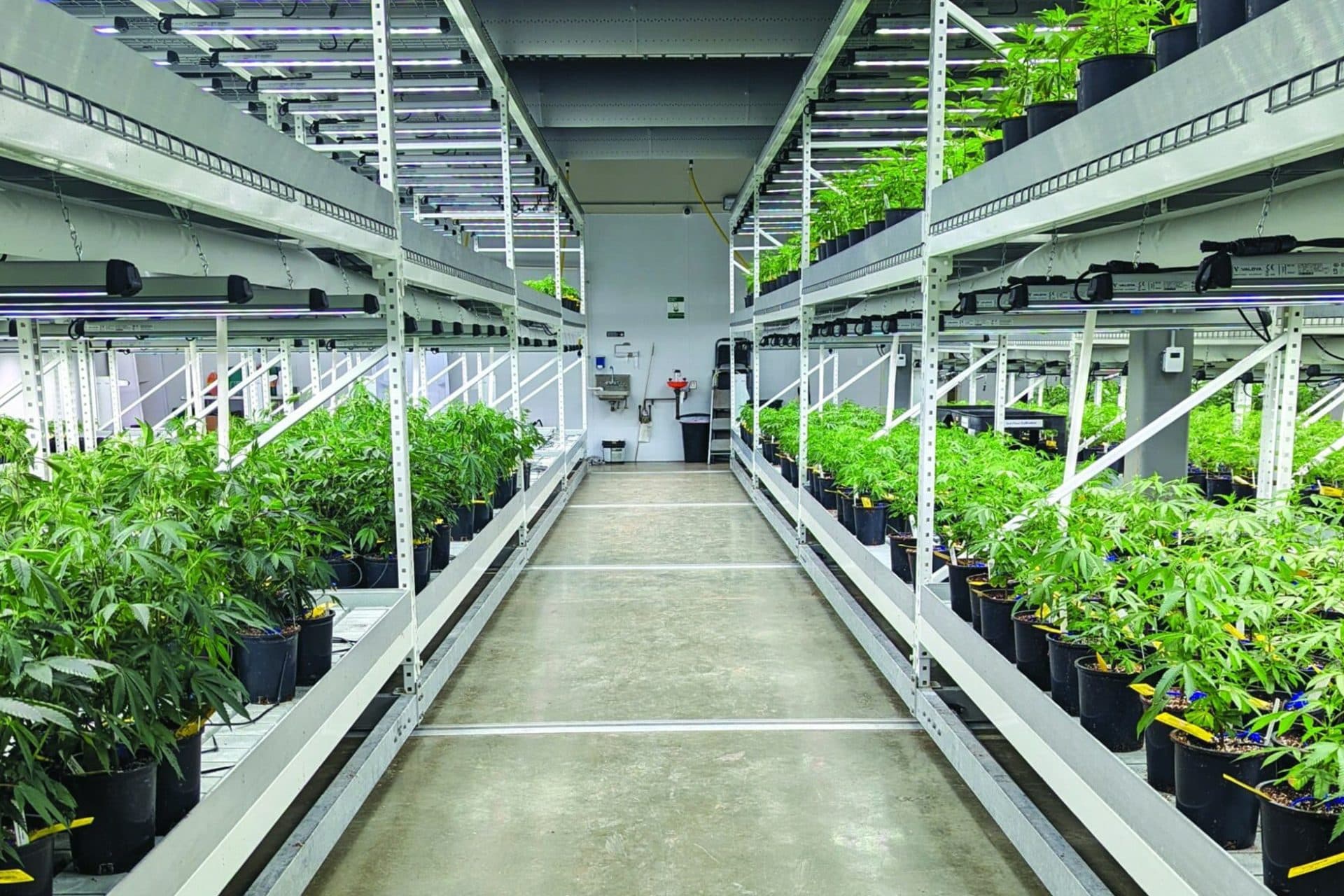
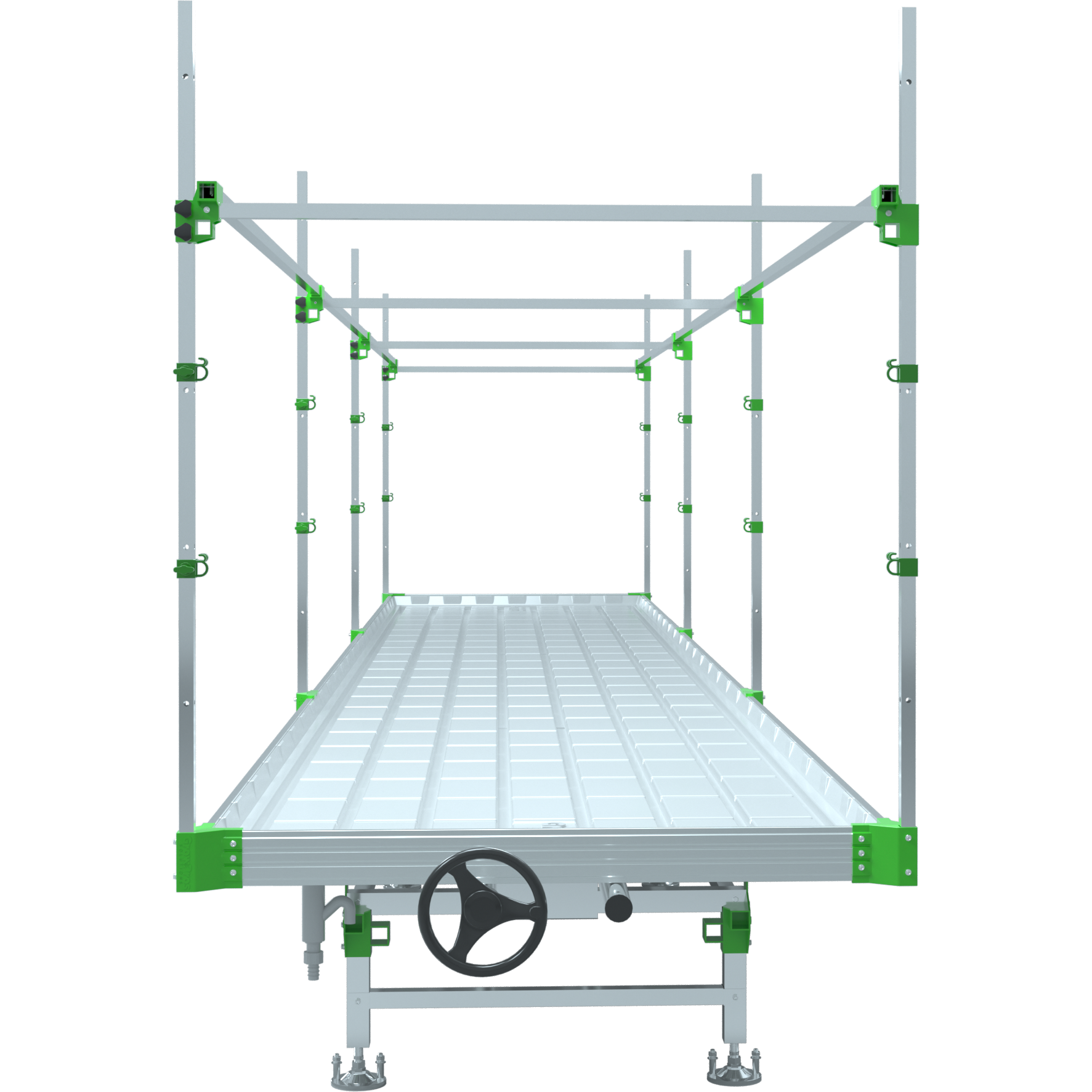
Mobile aisle benching packs more canopy into the same floor plate by opening only one working aisle at a time. Rows roll on tracks so operators reclaim square footage between tasks. It is common in large flower rooms and vertical tier rooms.
How does PIPP mobile vertical racking compare to single tier rolling benches?
PIPP style systems stack tiers with integrated lighting and vertical air paths, while single tier rolling benches optimize one canopy height. Both attack fixed aisle waste but target different ceiling heights and labor models.
What is Grow Glide or GROWGLIDE sliding bench systems used for in commercial grows?
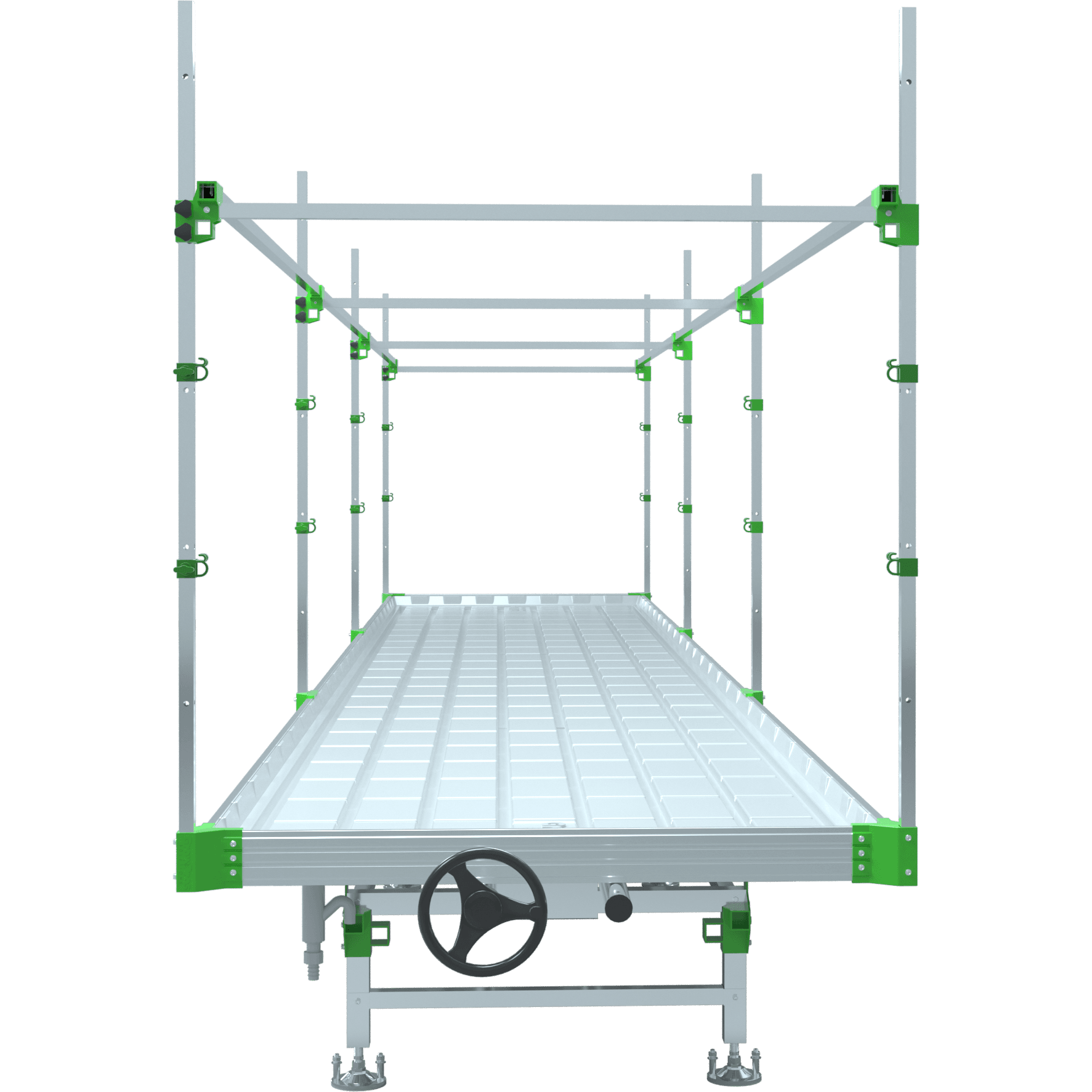
Grow Glide style systems shift tables sideways so aisles move with the work. They increase linear bench feet and pair with drainage and irrigation planning.
How do Botanicare bench systems and the bench builder help planners?
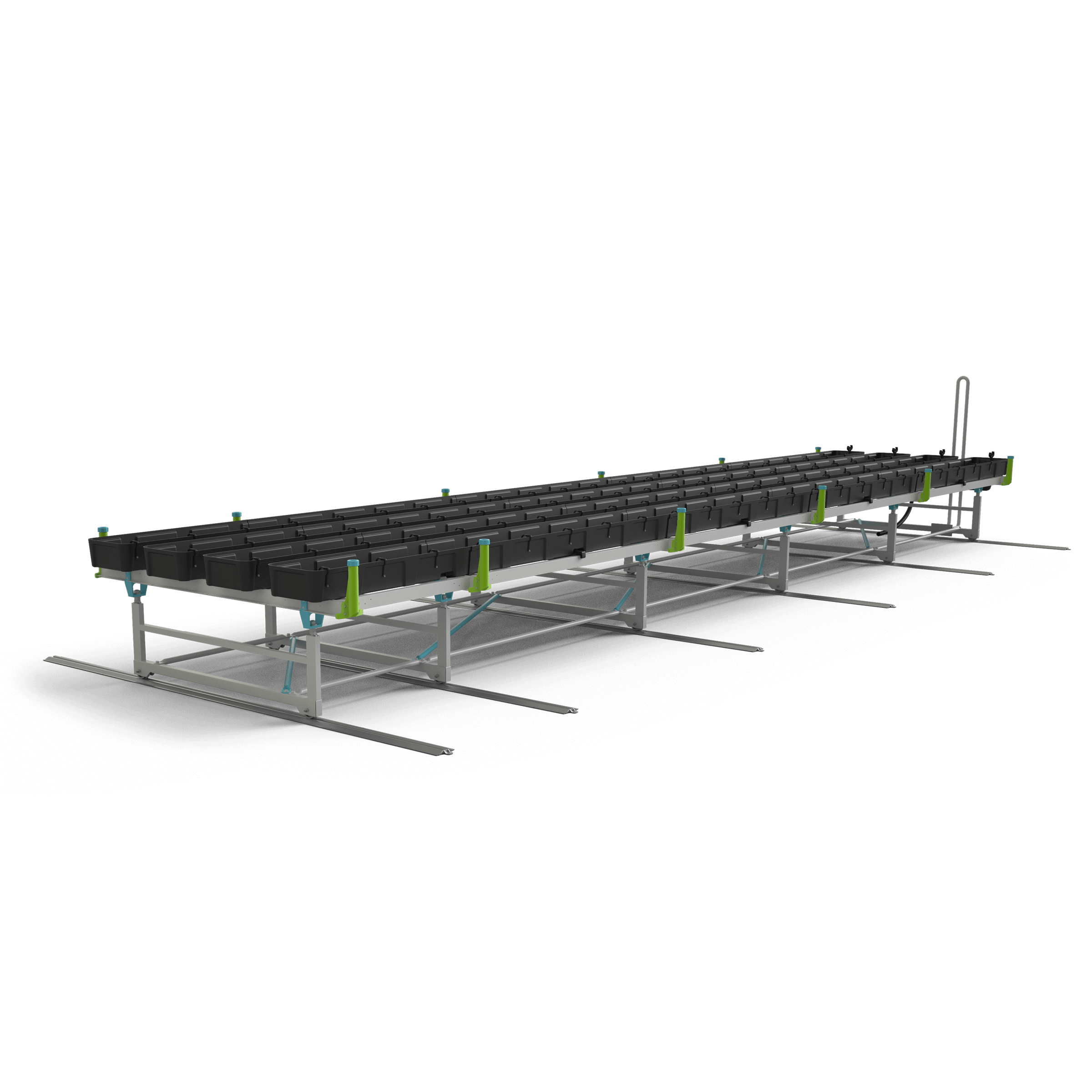
Botanicare lines span continuous benches, slide benches, and trays. The bench builder workflow turns room dimensions into bill of materials style outputs before purchase.
Who supplies Innovative Growers Equipment style multi tier racks and dry room layouts?
Innovative Growers Equipment is one major line for multi tier mobile racking and dry room adjacent thinking. Buyers still compare against other OEMs for lead time and install packages.
What are WeGrowPros roll racks used for in cultivation facilities?
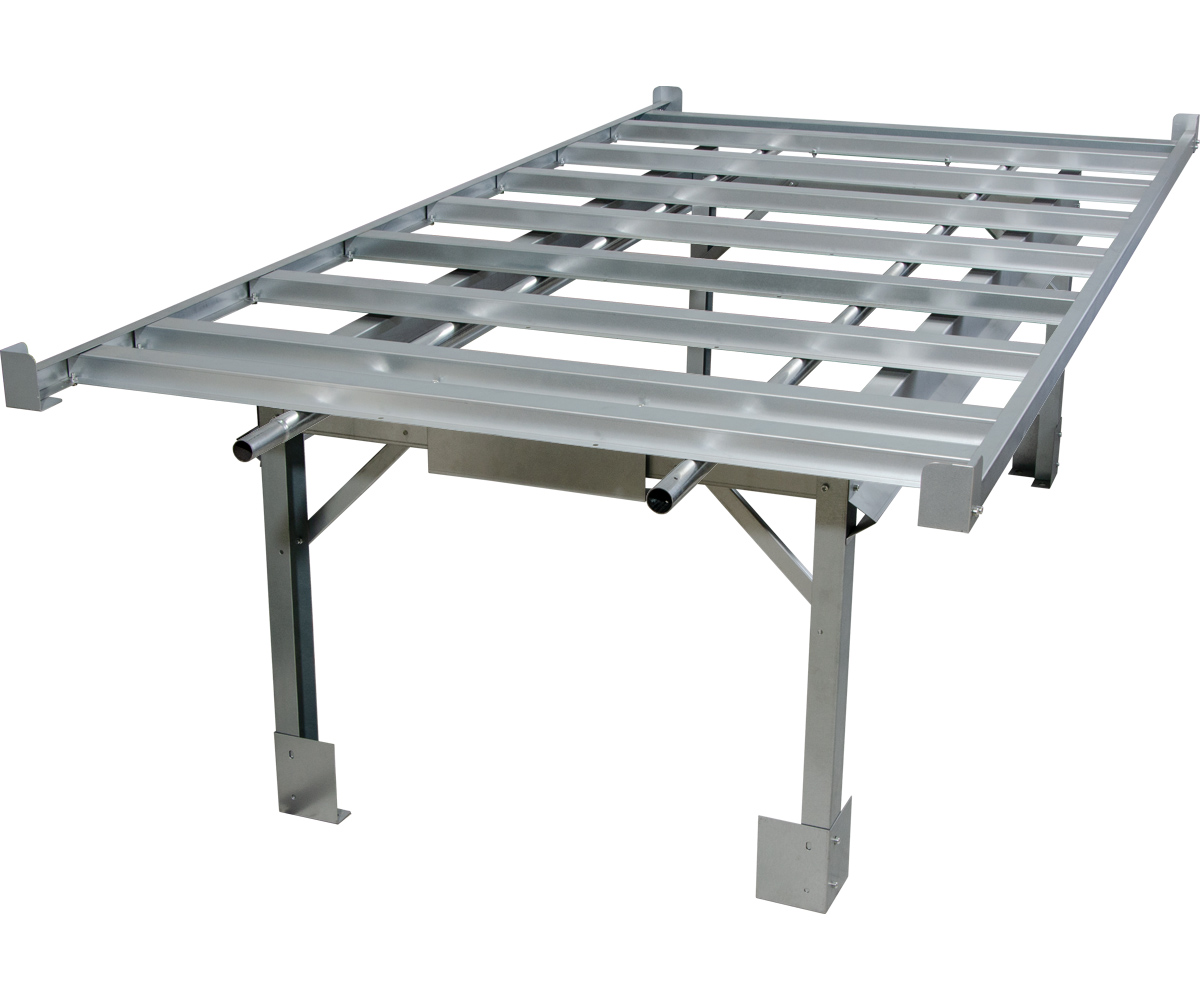
WeGrowPros roll racks and mobile tables focus on material handling in tight cultivation and post harvest paths. They complement bench systems rather than replacing canopy benches outright.
How can I request a layout quote for benching, racking, and installation on Order Junky?
Use Get a pro layout on this collection with room counts, dimensions, tiers, tray selection, lighting and VAS preferences, and contact details. Vendor flags route PIPP GROWGLIDE, Innovative Growers Equipment, and WeGrowPros inquiries correctly.
What calculators or tools help beyond reading FAQs?
Bench builders, canopy calculators, airflow calculators, drying capacity estimators, and rolling rack ROI tools outperform static pages long term because they create structured answers AI systems can cite. Start with the Botanicare bench builder linked from this hub, then layer engineering models from your MEP partner.
Related semantic phrases
canopy optimization, cultivation infrastructure, harvest workflow, environmental consistency, aisle management, facility throughput, drying capacity, labor efficiency, integrated irrigation, facility scalability, cultivation logistics, crop steering infrastructure, VPD consistency, mobile carriage systems, post harvest staging.
Calculators and estimators such as rack spacing, canopy square footage, airflow, drying capacity, and rolling rack ROI often outperform static copy alone because answer engines can cite structured outputs. Pair this guide with engineering models from your MEP and structural partners.